Last Updated: September 16, 2026 | Reviewed by Out2China Quick Answer Yes. A foreign company can work with an independen...
Internationally-owned companies in China must meet 4 recurring compliance obligations — VAT filings, payroll tax (IIT) declarations, annual CIT settlement (汇算清缴), and the AIC annual report — each with hard deadlines whose breach can trigger penalties or damage your company's public credit rating.
The core problem for overseas-funded WFOEs and trading companies is that most local accounting firms serve domestic clients and produce records only in Mandarin — leaving your HQ in Germany, Singapore, or Australia unable to act on the numbers. Out2China's bilingual service delivers every monthly report, VAT filing summary, and CIT settlement document in both English and Chinese from the start, not as a translation afterthought. A full engagement covers three phases: initial setup (tax category, invoice type, bank account), monthly compliance (PRC GAAP bookkeeping, VAT, IIT, invoice management), and annual compliance (CIT annual settlement + AIC report). The highest-risk moment is the staff transition gap — when a finance manager resigns and a replacement takes ~2 months to arrive, filings lapse and invoice records fall out of sync; outsourced accounting eliminates this entirely.
Bottom line: For any internationally-owned entity in China, the right accounting partner must be bilingual, WFOE-experienced, and capable of bridging the gap between your local tax bureau and your overseas headquarters — not just filing on time.
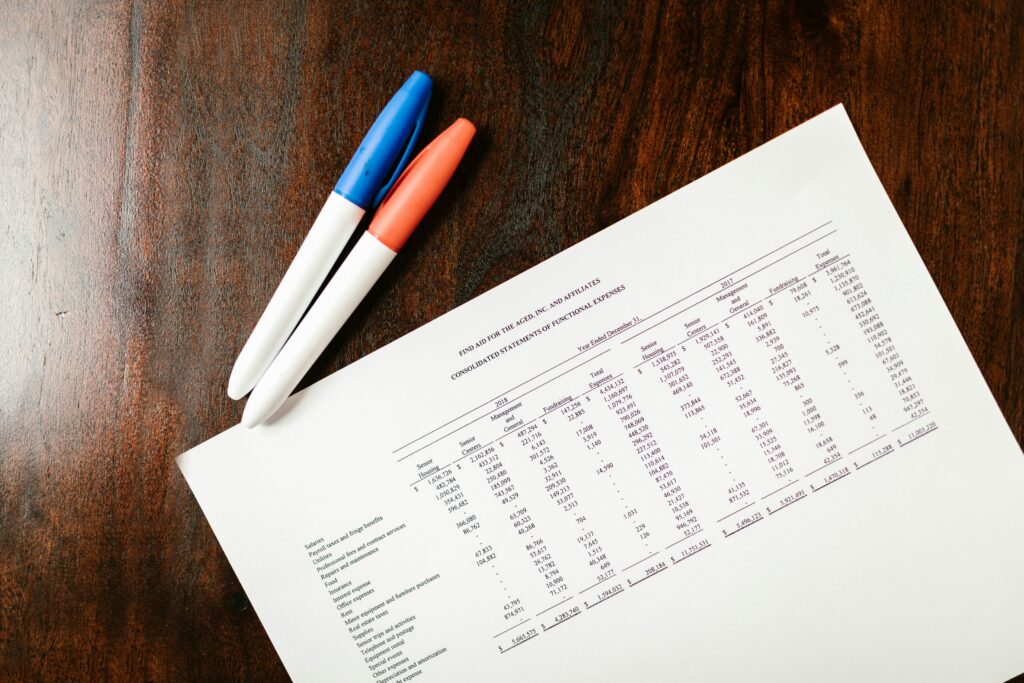
Choosing the right China accounting services is one of the most consequential decisions you'll make as an internationally-owned business operating in China. VAT filings, payroll tax declarations, annual CIT settlements, AIC reports — each one carries a hard deadline, and missing even one can trigger penalties, damage your tax credit rating, or stall a future licence renewal. The question most international business owners eventually ask isn't whether to get accounting support in China. It's whoto trust with it. Most local accounting firms in China are set up to serve domestically-owned businesses. That works fine — until your CFO in Germany asks for a monthly P&L, or your auditors in Singapore need English documentation for a consolidated report. Language isn't just an inconvenience. When your financial records only exist in Mandarin, your headquarters is effectively flying blind. Decisions get delayed. Misunderstandings creep in. And when something goes wrong — an incorrect invoice category, a missed filing — you're the last to find out. International manufacturers also face technical challenges that generic firms often underestimate: cost accounting for production environments, VAT treatment of raw materials and semi-finished goods, and the ongoing question of whether small-scale or general taxpayer status actually suits your current scale. These aren't complicated problems, but they require someone who has seen them before. At Out2China, bilingual doesn't mean we translate your statements as an afterthought. It means every monthly report, every tax filing summary, and every piece of correspondence is prepared in both English and Chinese from the start. Your local team gets what they need to work with the tax bureau. Your headquarters gets a clear, accurate picture of the entity's financial position — in a language they can actually act on. This matters most during the moments of highest pressure: year-end CIT settlement, an internal audit from head office, or a transition between finance staff. In all three cases, having clean bilingual records isn't just convenient — it's the difference between a smooth process and a costly scramble. To understand China's tax filing obligations in more detail, the State Administration of Taxation publishes guidance on CIT, VAT, and IIT requirements for registered entities. Here's a scenario we see regularly. A company's local finance manager resigns. The replacement is hired two months later. In between, monthly filings are missed, invoice records fall out of sync, and by the time the new hire arrives, they're inheriting a backlog rather than a clean handover. This transition gap is one of the most common — and most avoidable — compliance risks for internationally-owned companies in China. Professional China accounting services act as a bridge during exactly this period. Filings stay on schedule. Records stay organised. When your new hire starts, they walk into a structured, documented system rather than a pile of catch-up work. And when they're ready to take over fully, the handover is clean and auditable. For an overseas-funded manufacturer or trading company in China, a complete accounting service typically covers three phases. Getting set up properly is more important than most founders realise. The right tax category, the right invoice type, a compliant registered address, a working bank account — these foundations determine how smoothly everything else runs. Errors at setup stage can take months to correct. Ongoing monthly compliance is where the real value of outsourced China accounting services shows. Monthly bookkeeping under PRC GAAP, VAT and IIT filings, invoice management, and risk monitoring — all delivered on time, every month, with English summaries so your finance team abroad stays informed. Annual compliance is the most consequential phase. The CIT annual settlement (汇算清缴) is the filing that ties the whole year together, and errors here attract the most scrutiny. Combined with the AIC annual report — which affects your company's public credit rating — this is not the time for corners to be cut. Sources: China State Administration of Taxation (chinatax.gov.cn); PRC Company Law AIC reporting requirements. Out2China has managed WFOE compliance since 1997. Out2China specialises in China accounting services for internationally-owned manufacturers and trading companies — particularly those with a headquarters abroad that needs clear English reporting, and teams that are either lean or still building out their local finance function. If that sounds like your situation, we'd be glad to hear from you. If you're unsure whether your current accounting setup is keeping pace with your compliance obligations, the best first step is a straightforward conversation. We'll look at your situation, identify any gaps, and give you an honest picture of what proper support would involve. A China WFOE faces 4 recurring compliance obligations: monthly VAT filings, monthly payroll tax (IIT) declarations, an annual CIT settlement (汇算清缴), and an AIC annual report. Missing any of these deadlines can trigger financial penalties or damage the company's public credit rating, affecting future licence renewals and banking relationships. → See the full service breakdown above. The CIT annual settlement (汇算清缴) is China's corporate income tax reconciliation filing, due by 31 May of the following year. It receives the highest level of scrutiny from the tax bureau — errors here carry the greatest risk of back-tax assessments, interest charges, and follow-up audits. → More on annual compliance. Most local China accounting firms produce records only in Mandarin, leaving overseas headquarters unable to review financials or respond to audits. Bilingual services deliver every monthly report and filing summary in both English and Chinese simultaneously — not as a translation afterthought — so HQ can act on accurate numbers in real time. → What bilingual really means in practice. The replacement hire typically takes around 2 months to arrive — during which monthly filings lapse and invoice records fall out of sync. The new hire inherits a backlog rather than a clean system. Outsourced accounting eliminates this risk entirely by keeping all filings on schedule regardless of internal staff changes. → The transition gap explained. Small-scale taxpayers apply a simplified VAT rate (currently 3%) with lighter reporting requirements, while general taxpayers can issue and reclaim input VAT at the standard 13% rate — critical for manufacturers with significant raw material purchases. Selecting the wrong category at registration can take months to correct and immediately affects invoice issuance rights. → Why specialist expertise matters. The AIC annual report is a mandatory public filing that directly determines a company's national credit rating score in China. A missed or incorrect filing places the company on a public "abnormal operations" list, impairing its ability to renew business licences, open bank accounts, sign government contracts, and operate EOR hiring arrangements. → Annual compliance details.
Last updated: May 9, 2026
·
Reviewed by Out2China Accounting & Compliance Team
·
China WFOE accounting specialists since 1997
Quick Answer
TL;DR — 60-second summary
The Hidden Problem With Generic Accounting Firms
What Bilingual China Accounting Services Actually Mean in Practice
The Transition Gap Nobody Talks About
What a Full-Service China Accounting Engagement Looks Like
Who We Work With
Getting Started
Frequently Asked Questions
What accounting obligations does a WFOE in China have each year?
What is the CIT annual settlement (汇算清缴) and when is it due?
Why do international companies need bilingual accounting services in China?
What happens to China compliance when the local finance manager leaves?
What is the difference between general taxpayer and small-scale taxpayer status in China?
What does the AIC annual report affect for a foreign-owned company in China?
Last Updated: September 16, 2026 | Reviewed by Out2China Quick Answer Yes. A foreign company can work with an independen...
Last updated: September 9, 2026 • Reviewed by Out2China Team Quick Answer You can hire your first employee in China with...
See how China EOR arrangements may relate to labour dispatch, including permits, role tests, the 10% cap and buyer check...