
A startup's China operations manager position has been vacant for eleven weeks. The overseas founder has interviewed six...
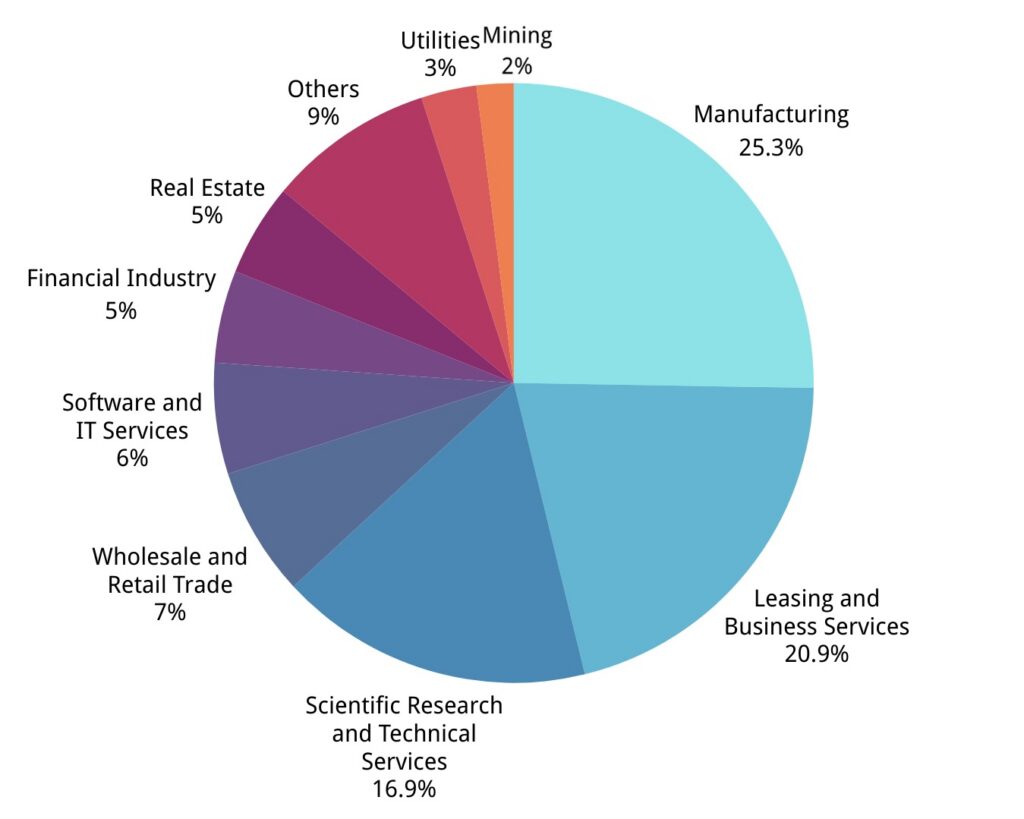
Recent data show that foreign investment activity in China showed clear structural features, including steady growth in reinvestment, an increase in newly established foreign-invested enterprises, continued industrial upgrading, and evolving patterns in capital sources. These trends indicate that foreign companies in China are focusing more on long-term operational positioning rather than simple market entry, while deepening localisation, strengthening high-value functions, and integrating China more closely into their global value chains. As global cross-border investment increasingly shifts from competing for new capital inflows to optimising the allocation of existing capital, more foreign-invested enterprises are transforming China’s market advantages and accumulated profits into deeper innovation and reinvestment within the country. This trend is accelerating the localisation of their China operations. According to China’s State Taxation Administration, foreign reinvestment in China that benefited from tax deferral policies reached RMB 162.28 billion in 2024, representing 15% year-on-year growth. This reflects rising confidence among foreign enterprises in China’s long-term economic potential and a stronger commitment to localized development. From an industry perspective, reinvestment covered 68 major industry categories, three more than the previous year. Regionally, western China saw particularly rapid growth, with foreign reinvestment increasing by 60.6% year on year. The 2025 Special Report on Economic Conditions in South China released by the American Chamber of Commerce in South China further shows that 76% of surveyed companies plan to reinvest in China in 2025, with reinvestment budgets over the next three to five years expected to increase by 33.2%, reaching USD 14.59 billion. In 2024, 59,000 new foreign-invested enterprises were established nationwide, up 9.9% year on year. Manufacturing accounted for 3,871 of these new firms, reflecting 6.8% growth, as foreign investors remain optimistic about the prospects of China’s high-quality manufacturing development. In the services sector, industries such as information transmission, software and IT services, as well as scientific research and technical services, contributed 30% of the total increase in newly established FIEs. By the end of 2024, the cumulative number of FIEs in China reached 1.239 million, with total utilised foreign investment approaching USD 3 trillion. China has continued to improve the policy environment for foreign investment in manufacturing, which now spans 31 major industry categories and 548 sub-categories, indicating a solid foundation. In 2024, actual foreign investment in manufacturing reached USD 31.12 billion, accounting for 26.8% of total utilised foreign investment — 5.3 percentage points higher than in 2020. High-tech manufacturing has been a key driver of quality improvement. In 2024, foreign investment in high-tech manufacturing reached USD 13.51 billion, representing 43.4% of total foreign investment in manufacturing and rising 3.7 percentage points year on year. Notably, foreign investment in medical instruments and instrumentation manufacturing, as well as computer and office equipment manufacturing, grew by 93.7% and 21.1%, respectively. Sub-sectors such as computer assembly, office equipment, general instrumentation, and specialised instrumentation have become key focus areas for foreign investors. Actual foreign investment in China’s services sector reached USD 82.24 billion in 2024, accounting for 70.8% of the total. Within this, producer services attracted USD 68.39 billion, or 58.8% of total utilised foreign investment, up 5.3 percentage points year on year. Sub-sectors experiencing rapid growth include inspection, testing and certification services, equipment leasing services, consulting and research services, and handling, packaging, and agency services. This reflects robust domestic demand for higher-level producer services that support manufacturing, logistics, and innovation activities. China’s total R&D expenditure exceeded RMB 3.6 trillion in 2024, up 8.3% year on year and ranking second globally. As China’s innovation ecosystem continues to improve, more foreign enterprises are positioning China as a source of technological innovation and accelerating the establishment of R&D centres. In 2024, Shanghai newly recognised 30 foreign R&D centres, bringing the cumulative total to 591, while Beijing newly recognised more than 110, raising its total to 221, across fields such as healthcare, information technology, and intelligent manufacturing. Asia remains China’s largest source of foreign investment. In 2024, investment from ten Asian economies and regions (i.e., Hong Kong SAR, China; Taiwan, China; Indonesia; Japan; Macao SAR, China; Malaysia; the Philippines; Singapore; South Korea; and Thailand) totalled USD 99.16 billion, accounting for 85.3% of the total. At the same time, investment from the European Union and North America reached USD 6.82 billion and USD 4.67 billion, with their shares rising compared with 2021. Singapore remained China’s largest source of foreign investment for the 12th consecutive year, with investment of USD 10.85 billion. The United States and the United Kingdom ranked second and third. The top ten source economies accounted for 94.5% of total foreign investment. Meanwhile, investment from several countries grew rapidly. European countries such as Portugal, Ireland, Austria, and Spain saw triple-digit growth, while ASEAN countries including Thailand, the Philippines, Malaysia, and Singapore also recorded strong increases. Canadian investment in China rose by 34.2%, signalling continued confidence in the Chinese market. Despite a complex global and domestic environment, China’s industrial economy continued to recover in 2024. The operating profit margin of large-scale industrial enterprises nationwide stood at 5.4%, while large foreign-invested industrial enterprises achieved a higher margin of 6.6%, 1.2 percentage points above the national average. Foreign enterprises in China have generally maintained solid returns. According to the China Business Climate Survey Report released by the American Chamber of Commerce in China, nearly half of surveyed U.S. companies reported significant profitability in 2024. Overall, the data suggest that foreign investment in China is not merely persisting, but evolving — shifting toward reinvestment, high-tech manufacturing, producer services, and R&D functions, while remaining supported by stable returns and diversified capital sources.Reinvestment by Foreign Enterprises Continues to Grow
Continued Growth in Newly Established Foreign-Invested Enterprises
Industrial Structure of Foreign Investment Continues to Upgrade
Strong Growth in Producer Services
Accelerated Layout of Foreign R&D Centres
Evolving Sources of Foreign Investment

Stable Returns for Foreign Enterprises in China
A startup's China operations manager position has been vacant for eleven weeks. The overseas founder has interviewed six...
A German company posts a Shanghai operations manager role. They research Glassdoor, check LinkedIn Salary, and set what ...
Most companies hiring in China are already doing something wrong — they just don't know it yet. And in many cases, they ...