
A startup's China operations manager position has been vacant for eleven weeks. The overseas founder has interviewed six...
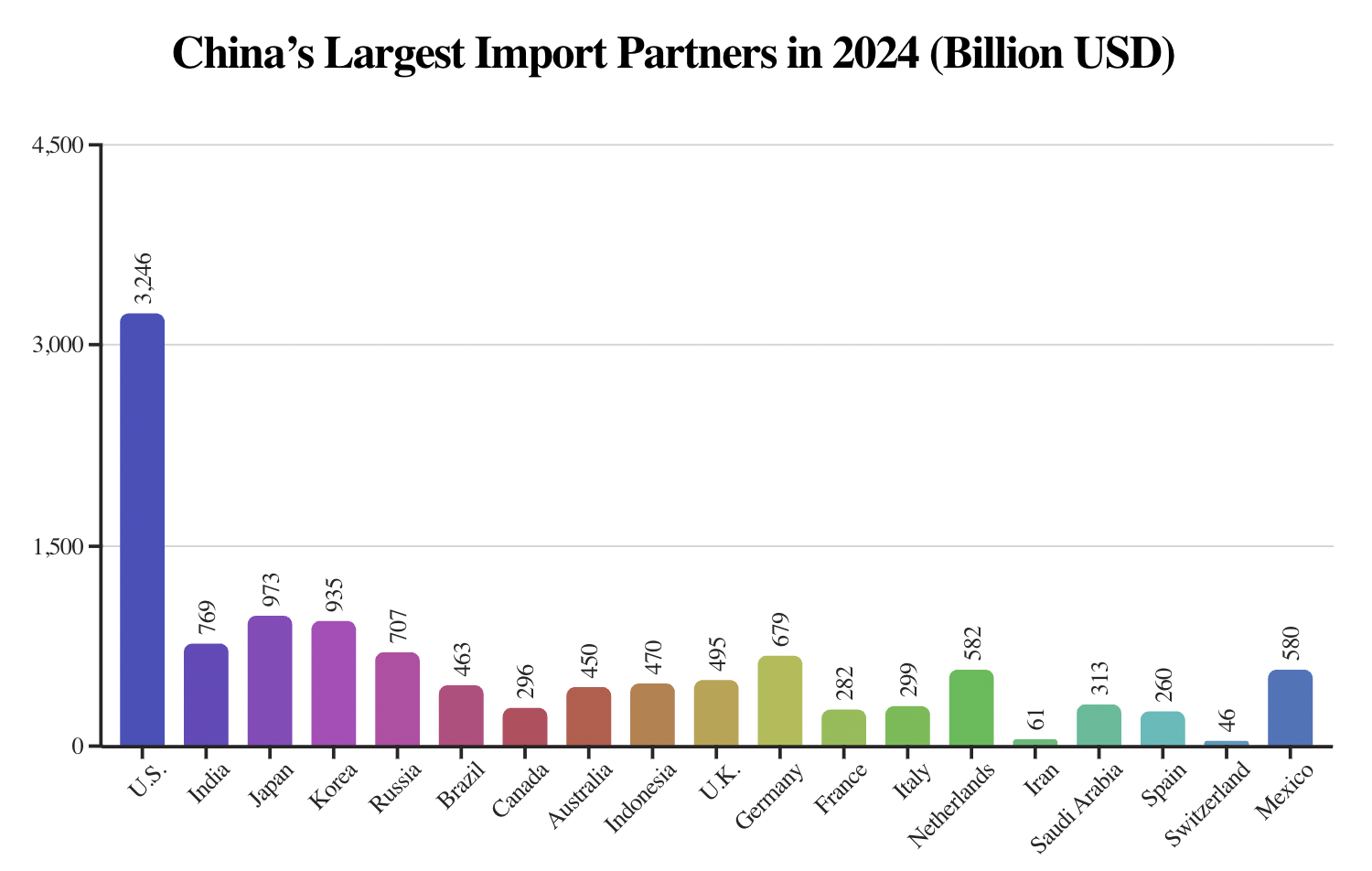
In 2024, China’s total import value reached approximately US$2.58 trillion—slightly more than the entire GDP of Italy. This scale alone signals the magnitude of opportunity for global businesses. But beyond volume, China’s import patterns reflect rising domestic demand, an expanding middle class, and a sustained commitment to global economic integration. From raw materials to high-tech equipment and premium consumer goods, the types of products China imports reveal where the country is headed—and what it needs from the world. For companies considering expansion, these data points are more than trade statistics; they are strategic indicators. Doing business in China doesn’t just mean entering a large market—it means aligning with one of the most dynamic and globally connected economies on the planet. In 2024, China’s total import value reached US$2.6 trillion, up from US$1.7 trillion in 2015, reflecting a compound annual growth rate (CAGR) of 4.9% over the past nine years. This steady upward trend underscores China’s long-term trajectory as a major global importer. The growth is driven by several macro trends, including rising domestic consumption, particularly in high-tech, green, and value-added products, as China advances its industrial upgrading agenda. Additionally, initiatives like the Belt and Road Initiative (BRI) have expanded trade with participating countries, further boosting import volumes. At the same time, evolving global trade dynamics and China’s emphasis on technological self-reliance are beginning to reshape its import structure—potentially reducing reliance on certain industrial goods while increasing demand for strategic technologies and resources. Companies engaging in business in China must understand these macroeconomic signals to position themselves effectively. China’s imported goods are classified into ten categories, covering both essential raw materials and advanced industrial products: Primary Products (Categories 0–4): Industrial Products (Categories 5–9): In 2024, primary products accounted for US$1.06 trillion, representing approximately 38% of China’s total imports. In contrast, industrial products made up the remaining 62%, totalling US$1.74 trillion. Among all categories, Category 7: Machinery and transport equipment recorded the highest import value at US$892 billion, followed by Category 3: Mineral fuels, lubricants, and related materials. The overall growth in China’s imports from 2015 to 2024 has been primarily driven by increased demand in Categories 0, 2, 3, 5, and 7, indicating rising needs in areas such as food security, raw materials, energy, chemicals, and advanced manufacturing. These shifts align closely with China’s broader policy priorities—including industrial upgrading, energy diversification, and green transformation. In 2024, the United States remained China’s largest import partner, exporting goods worth US$3.25 trillion—a figure more than three times that of the second-largest partner, Japan, whose exports to China totaled US$973 billion. Other key trade partners include South Korea, Germany, India, and Russia, each playing a significant role in supplying essential goods across sectors such as electronics, machinery, chemicals, and energy. The dominance of these countries reflects not only supply chain complementarity but also long-standing bilateral trade ties and regional integration dynamics. The wide distribution of top import sources also highlights how global companies—especially those aligned with China’s industrial and consumption priorities—have been able to gain and maintain a foothold in this complex and competitive market. China’s import data in 2024 paints a clear picture of a market that is both massive in scale and rapidly evolving in structure. With total imports exceeding US$2.6 trillion, demand spans from primary goods like food and energy to high-value industrial products such as machinery, chemicals, and transport equipment. The dominance of countries like the U.S., Japan, and Germany as key import partners reflects the importance of supply chain fit, product competitiveness, and long-term trade relationships. Meanwhile, the increasing share of high-tech and strategic imports suggests that China is shifting from volume-driven growth to quality- and innovation-driven demand. For international companies, this presents not just an opportunity to sell to China—but to become a lasting part of its industrial and economic transformation. The key to successful China market entry is understanding where specific offerings align with China’s evolving priorities. From there, it’s about building the right strategy to land, localise, and grow. 1. Why China’s Import Trends Matter
2. China’s 2024 Import Snapshot

3. What Does China Import? Product Category Breakdown

4. Who Supplies China? Top Import Partners
5. Key Insights for International Companies
A startup's China operations manager position has been vacant for eleven weeks. The overseas founder has interviewed six...
A German company posts a Shanghai operations manager role. They research Glassdoor, check LinkedIn Salary, and set what ...
Most companies hiring in China are already doing something wrong — they just don't know it yet. And in many cases, they ...