Most companies hiring in China are already doing something wrong — they just don't know it yet. And in many cases, they ...
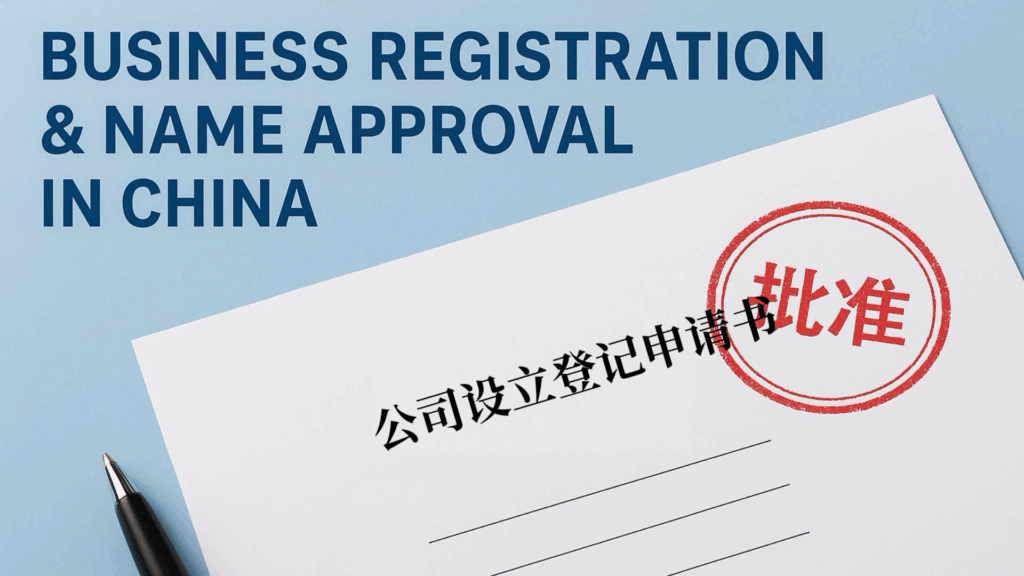
When overseas companies decide to enter China, the first challenge is not marketing or hiring, but registration. Unlike many jurisdictions where names are flexible and the business scope can be broad, China requires companies to follow a far more structured and tightly regulated process. Understanding this at the start will save both time and cost later. (This article focuses on the name approval and business scope. For a full overview of all five steps, see our China Company Registration Guide for Overseas Businesses.) Every company registered in China must have a name in Chinese characters. Even if you plan to operate internationally under an English brand, your official company license will only display the Chinese name. The format is also standardized: city, brand or trade name, industry descriptor, and company type — for example, Shenzhen ABC Technology Co., Ltd. Names are also subject to restrictions. Words such as “China (中国)”, “International (国际)”, or “Group (集团)” are not freely available. They require higher levels of capital or specific qualifications. Many foreign investors find their applications rejected simply because they were unaware of these thresholds. In China, the business scope is more than a formality. It is a legally binding statement of what your company is allowed to do. This scope must be written in standardized terms pre-approved by local authorities and inserted into your Articles of Association. Unlike overseas markets, where a vague phrase like “any lawful business” is often acceptable, Chinese authorities require precision. This becomes even more critical if your activities touch on regulated industries such as education, healthcare, finance, or logistics, which all demand special permits. Registering too broadly can lead to rejection, while registering too narrowly may restrict your ability to operate later. Changing the scope after registration is possible but involves formal filings with the Administration for Market Regulation (AMR) and, in some cases, tax re-registration — adding complexity, time, and cost. Another key point is registered capital. While many consulting or trading companies enjoy flexibility, certain industries impose minimum capital requirements. For instance, financial services and logistics companies must commit to specific thresholds before they can be approved. Even for companies without these obligations, the choice of business scope influences future operations, including tax filings, VAT rebates, and import/export licensing. Getting it wrong at the start can create expensive roadblocks later. With 28 years of local expertise, Out2China helps international businesses avoid these pitfalls. We guide our clients in selecting compliant Chinese names, drafting a business scope that balances compliance with future flexibility, and navigating industry-specific capital or licensing requirements. Getting it right the first time doesn’t just shorten the registration process — it ensures smoother operations and a stronger foundation for long-term success in China. If you are planning to register a company in China, contact our team. We’ll help you set up with confidence and avoid costly mistakes.Company Name Approval
Business Scope
Capital and Industry Requirements
How Out2China Helps
Most companies hiring in China are already doing something wrong — they just don't know it yet. And in many cases, they ...
What legal risks should we prepare for when hiring in China? We often speak with CFOs who are comfortable modeling cost ...
If you’ve read our EOR vs WFOE guide, the next logical question is simple: what does hiring in China with an Employer of...