
Most companies hiring in China are already doing something wrong — they just don't know it yet. And in many cases, they ...
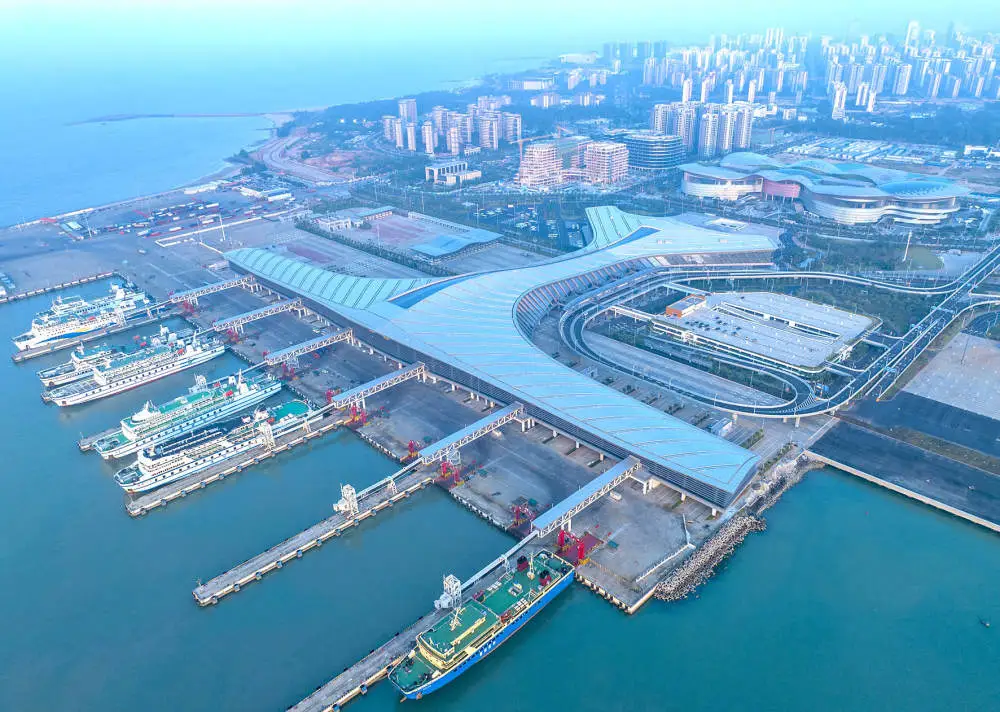
On December 18, 2025, China opened a new free trade port with the launch of the Hainan Free Trade Port’s full-island opening. This marks a new phase in China’s high-level, institutional opening-up. For international companies seeking long-term growth, this is not simply the addition of another free trade zone, but the creation of a structurally different platform for engaging with China’s 1.4-billion-consumer market — one built around zero tariffs on a wide range of imports, competitive tax policies, and increasingly flexible cross-border capital flows. Below is a practical overview of the key policy advantages now in effect. Following the launch of full-island opening, Hainan now operates as a special economic zone that is “within the national territory but outside the traditional customs framework.” The system is built around three core principles. Opening the first line refers to Hainan’s interface with global markets. Import tariffs on eligible goods have expanded significantly, with the proportion of zero-tariff items increasing from 21% to 74% (around 6,600 product categories). Most production equipment and raw materials can now be imported into Hainan duty-free, materially lowering upfront and operating costs. Managing the second line governs the movement of goods from Hainan into mainland China. While such movement is treated as an import, a critical incentive applies: goods processed in Hainan with value-added exceeding 30% may enter the mainland market tariff-free. In practical terms, this creates a “manufacture in Hainan, serve the national market” model with meaningful cost advantages. Free flow within the island ensures efficient movement of goods, capital, and personnel across Hainan, supporting day-to-day operations and regional integration. Importantly, this framework is not designed to restrict activity. Rather, it reflects a recalibration of customs supervision intended to align more closely with international trade norms while maintaining domestic market order. The scope of tariff exemptions is unprecedented. With limited exceptions under a negative list, most self-use production equipment, infrastructure materials, and raw and auxiliary inputs are exempt from import duties, VAT, and consumption tax. These exemptions apply across the full industrial chain, from R&D to manufacturing and processing, significantly reducing both initial capital expenditure and ongoing operating costs. For example, a medical device manufacturer can import high-end equipment and core components into Hainan duty-free. If the finished products achieve more than 30% value-added locally, they may then be sold into the mainland market without tariffs. Enterprises engaged in encouraged industries and conducting substantive operations in Hainan are eligible for a reduced corporate income tax rate of 15%, compared with the standard 25% rate in mainland China. For high-end and urgently needed talent, the portion of individual income tax exceeding 15% is exempt. This materially improves after-tax income and strengthens Hainan’s competitiveness in attracting global talent. By way of comparison, a company generating RMB 10 million in profit could save approximately RMB 1 million in corporate income tax by operating in Hainan. Hainan applies a negative-list approach to cross-border trade in services, with levels of openness in sectors such as finance, healthcare, and education exceeding those typically available in mainland China. For overseas investors, this translates into clearer rules and fewer market-entry barriers. The Multi-functional Free Trade Account (EF Account) is now fully operational, supporting cross-border settlement, foreign exchange transactions, and investment and financing activities. The system follows the same “first line open, second line managed” principle. As of October 2025, cumulative EF account transactions reached RMB 268.9 billion, involving fund transfers with more than 80 countries, indicating a stable and increasingly mature financial framework. Hainan is concentrating policy and capital resources on building a modern industrial system, with particular support for: Tourism and modern services, including medical tourism and international education. In the digital economy, Hainan has already deployed international submarine cables and large-scale data centres, including the world’s first commercial undersea data centre. This infrastructure provides a strong foundation for digital trade and offshore data services. Compared with established international free trade hubs such as Singapore or Dubai, Hainan’s strategic value lies in its direct integration with China’s domestic market. Hainan is embedded within the world’s second-largest economy, offering a unique platform for coordinating onshore and offshore business activities. Its land area of 35,400 square kilometres provides substantial capacity for manufacturing, logistics, and R&D, far exceeding that of many comparable free trade ports. As a national-level reform and opening-up pilot zone, Hainan also benefits from policy continuity and progressive upgrades, giving international enterprises a clearer long-term outlook rather than a short-term incentive play. The launch of full-island opening marks an institutional milestone, not an endpoint. Core measures such as zero tariffs, duty-free value-added processing, and the “dual 15%” tax incentives are now in active operation, supported by customs, financial, and regulatory infrastructure. For international companies — particularly in advanced manufacturing, healthcare, digital technology, and trade and logistics — this is an appropriate moment to conduct strategic assessment and consider concrete market entry or expansion plans. At the same time, successful execution depends on understanding the practical application of these policies: meeting substantive operation requirements, designing compliant tax and business structures, and efficiently completing company setup, banking, and talent recruitment. This is where local expertise becomes critical. We work closely with international companies entering and expanding in China and have hands-on experience with the regulatory and operational framework of the Hainan Free Trade Port. From market entry strategy and entity setup to tax planning, human resources, and localisation, we help translate policy frameworks into workable, compliant business operations. China’s next phase of opening-up is taking shape in Hainan. The question is no longer whether the opportunity exists, but how effectively it can be executed. If Hainan is on your strategic horizon, we would be glad to continue the conversation.I. Core Advantages: Understanding “Opening the First Line, Managing the Second Line, Free Flow Within the Island”

II. Five Key Policy Incentives for International Enterprises
1. Zero Tariffs: Lowering Operational and Production Costs
2. Preferential Tax Rates: Enhancing Profitability and Talent Attraction
3. Relaxed Market Access: A More Open Business Environment
4. Facilitated Cross-Border Capital Flows: Financial Infrastructure in Place
5. Industry Focus and Entrepreneurship Support: Positioning for Future Growth
High-tech industries such as biopharmaceuticals, digital economy, aerospace, and deep-sea technology.
Tropical high-efficiency agriculture.
III. Why Hainan? Its Distinct Strategic Value Among Free Trade Ports
IV. The Window for Action Is Open: Turning Policy into Execution
Most companies hiring in China are already doing something wrong — they just don't know it yet. And in many cases, they ...
What legal risks should we prepare for when hiring in China? We often speak with CFOs who are comfortable modeling cost ...
If you’ve read our EOR vs WFOE guide, the next logical question is simple: what does hiring in China with an Employer of...