Last Updated: 13 November 2026 | Reviewed by Out2China Foreign employers can support employee retention in China by setting clear role expectations, building a compensation structure that fits the position, making training and handovers repeatable, and using consistent performance-management processes. For overseas teams, recruitment support and appropriate PEO services can help establish these foundations. The right approach depends on the role, the company’s operating model, and the scope of the service arrangement. Hiring the right people is only the first step in employee retention in China; foreign employers also need clear responsibilities, competitive and transparent compensation, consistent training, and a practical way to manage performance across locations. These foundations can help employees understand their role and give employers a more stable operating team. Frequent turnover can interrupt production coordination, order follow-up, quality control, sourcing, finance, and administrative work. When an employee leaves, the business may need to recruit again, transfer responsibilities, and rebuild role-specific knowledge. This can be especially disruptive when a China-based team supports an overseas head office or customers in other markets. Retention is not only about preventing resignations. It is also about creating working conditions in which employees understand what is expected, receive the information and training they need, and can see how their work is assessed. Compensation should reflect the responsibilities, experience, and requirements of the position, as well as the local market. Before opening a role, employers should define the expected scope of work and assess whether the proposed package is aligned with that scope. A clear structure can include base salary, any applicable bonus or incentive arrangement, benefits, and the criteria used to review compensation. For pay figures, see our China salary guide. It is also important to explain how compensation is determined and when it may be reviewed. If variable pay is offered, employees should understand the relevant targets and calculation method. Transparent expectations can reduce misunderstandings and help employees evaluate the role realistically. Employees need to understand their responsibilities, priorities, and how their work will be evaluated. Employers can set role-specific KPIs or OKRs, define reporting expectations, and schedule regular performance reviews. Measures should reflect the actual work—for example, order progress tracking, production coordination, reporting accuracy, or quality-related outcomes where relevant. A consistent management process is one practical way to improve employee retention in China. Performance expectations should be realistic, measurable, and communicated before an assessment takes place. Reviews should also provide an opportunity to identify obstacles, clarify priorities, and agree on reasonable next steps. Role-specific training is easier to maintain when instructions, process notes, and handover materials are documented. This is particularly useful for work involving product specifications, supplier processes, quality requirements, internal systems, and recurring operational procedures. The client remains responsible for specialised product and process training. Depending on the agreed service scope, support may include recording training completion, tracking outstanding items, coordinating repeat sessions, and helping organise handovers when responsibilities change. This makes it easier to keep essential knowledge accessible without replacing the client’s technical expertise. Employers should establish clear reporting lines, agree on response-time expectations, document recurring workflows, and decide which information needs to be shared with the wider team, because unclear communication and inconsistent reporting can create avoidable friction when employees in China support a team based overseas. Management processes can include regular work reviews, KPI or OKR tracking, and agreed reporting formats. These measures help managers assess progress and identify problems early. They should support the employee’s actual responsibilities rather than create unnecessary reporting work. A hybrid arrangement may suit some roles, particularly where employees need a balance between focused work and in-person coordination. The feasibility depends on the job, the employee’s location, available facilities, and the agreed service arrangement. In some arrangements, an employee may be able to work from a local office one to three days per week, if the facilities and service scope allow it. Employers should confirm the practical details before presenting this as an option, rather than assuming that every role or location can support the same schedule. When an employee resigns, it is useful to understand the reasons before immediately reopening the position. Possible factors include a mismatch between the job description and actual duties, unclear expectations, limited training, compensation concerns, workload, or management processes that do not fit the role. A brief, respectful exit conversation and a review of the employee’s original role expectations may reveal issues that can be addressed. Employers should distinguish between a role-specific problem and a broader process issue so that the same difficulties do not recur with the next hire. Retention starts with hiring for the actual role. A clear job description should reflect the responsibilities, required experience, reporting relationships, and working arrangement. Recruitment support can help overseas employers define the position, reach relevant candidates, and assess whether candidates’ experience matches the work the business needs to get done. For companies without their own China entity, the hiring and employment arrangement needs to be considered carefully. The appropriate structure depends on the role and the activities the employee will perform. Roles involving local sales, negotiating or signing contracts on behalf of a foreign company, or activities that may raise permanent establishment, tax, or regulatory questions should not be treated as routine EOR placements; they require a separate compliance assessment. For the responsibilities involved, see our EOR service scope and responsibilities. PEO services can help clients design compensation frameworks and establish KPI/OKR frameworks and performance review processes. The client sets the specific performance targets and makes the final assessments, while remaining responsible for directing the employee’s work and providing specialised product or process training. For overseas employers, connecting recruitment with effective workforce management can support employee retention in China while helping maintain operational continuity. Employee retention in China is an employer’s ability to keep employees in their roles over time. Clear expectations, appropriate compensation, consistent training and practical performance management all contribute. Retention is not only about preventing resignations; it also means employees understand what is expected, receive the information and training they need and can see how their work is assessed. Foreign employers can improve retention by defining the role accurately, setting transparent compensation and performance expectations, documenting key processes and reviewing employee feedback. When someone resigns, understanding the reasons before reopening the position helps stop the same problem recurring with the next hire. Recruitment and workforce-management support may help establish consistent practices. No, compensation alone does not determine whether employees stay. Pay matters, but role clarity, workload, training, management practices and whether the actual job matches what was promised also influence the decision. Explaining how compensation is set, when it may be reviewed and how any variable pay is calculated can reduce misunderstandings. Overseas managers can support employees in China by setting clear reporting lines, agreeing on communication and response-time expectations, documenting recurring workflows and holding regular performance reviews. Agreed reporting formats and KPI or OKR tracking help managers spot problems early, but processes should stay practical and relevant to the employee’s actual responsibilities. Yes, PEO services can support retention by helping clients design compensation frameworks and set up KPI or OKR frameworks and performance review processes. The client sets the specific targets and makes the final assessments. The client also remains responsible for directing the employee’s work and for specialised product or process training. No, not every role suits an EOR arrangement in China; suitability depends on the role and the activities involved. Local sales, negotiating or signing contracts on behalf of a foreign company, and activities that may raise permanent establishment, tax or regulatory questions require a separate compliance assessment before a structure is chosen. Out2China supports overseas businesses with hiring in China and related workforce solutions. If you are planning to build or strengthen a China-based team, discuss your role requirements and operating model with our team to identify an approach suited to your business. Learn about our recruitment agency and RPO services; read our China hiring guide.Quick Answer
Introduction

Why Employee Retention Matters for Foreign Employers in China
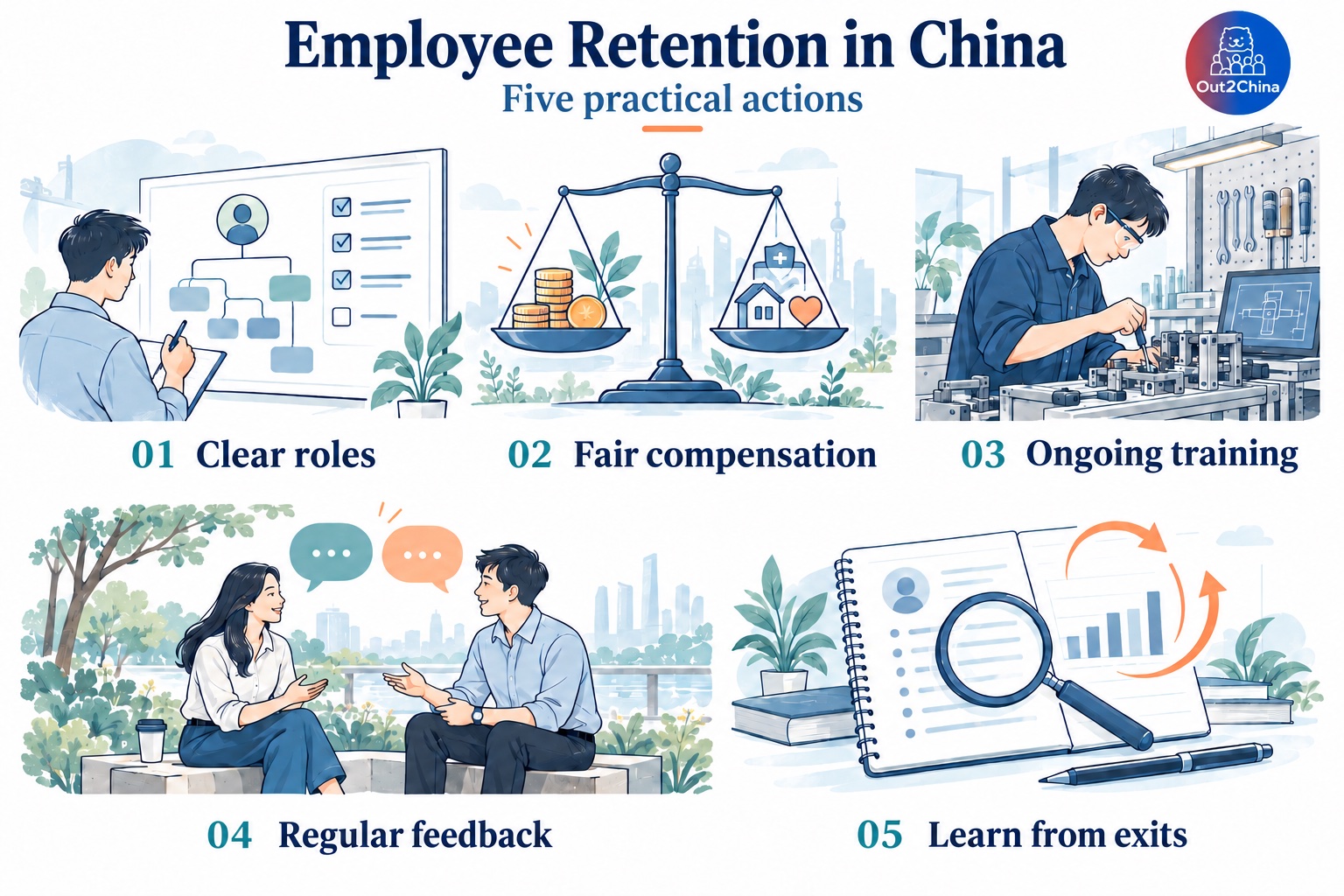
Build a Compensation Structure That Matches the Role
Improve Employee Retention in China Through Clear Performance Expectations
Make Training More Consistent and Easier to Repeat
Establish a Practical System for Managing Remote Employees
Consider Whether a Hybrid Working Arrangement Is Suitable
Understand Why Employees Leave Before Replacing Them
How Recruitment and PEO Support Employee Retention in China
Recruitment Support
PEO Support
Further Reading
Frequently Asked Questions
1. What is employee retention in China?
2. How can foreign employers improve employee retention in China?
3. Does compensation alone determine whether employees stay?
4. How can overseas managers support employees working in China?
5. Can PEO services help with employee retention in China?
6. Can every role be hired through an EOR arrangement in China?
Build a More Stable China Team with Out2China
Learn how to hire procurement managers in China, compare salaries across cities and industries, and find the right locat...
A foreign employee needs a China work permit and a work-type residence permit before starting work. If your company has ...